20+
Crypto pairs
24/7
Market access
100:1
Max leverage on BTC
The Future of Money, Available Now
Trade the world's most popular cryptocurrencies on a platform designed for active traders. Access live price feeds, professional charts, and deep order books around the clock, every day of the year — including weekends and public holidays.
Cryptocurrency markets never close. Unlike traditional equity markets with defined trading hours, crypto trades continuously — meaning price can move dramatically at 3am on a Sunday just as much as during Monday's London open. This creates both opportunity and risk that require an adapted approach compared to traditional market trading.
24/7 Markets
Crypto never closes. Trade BTC, ETH, and altcoins any time, any day.
Market & Limit Orders
Execute at market price or set limit orders to enter at your preferred level.
Live Order Book
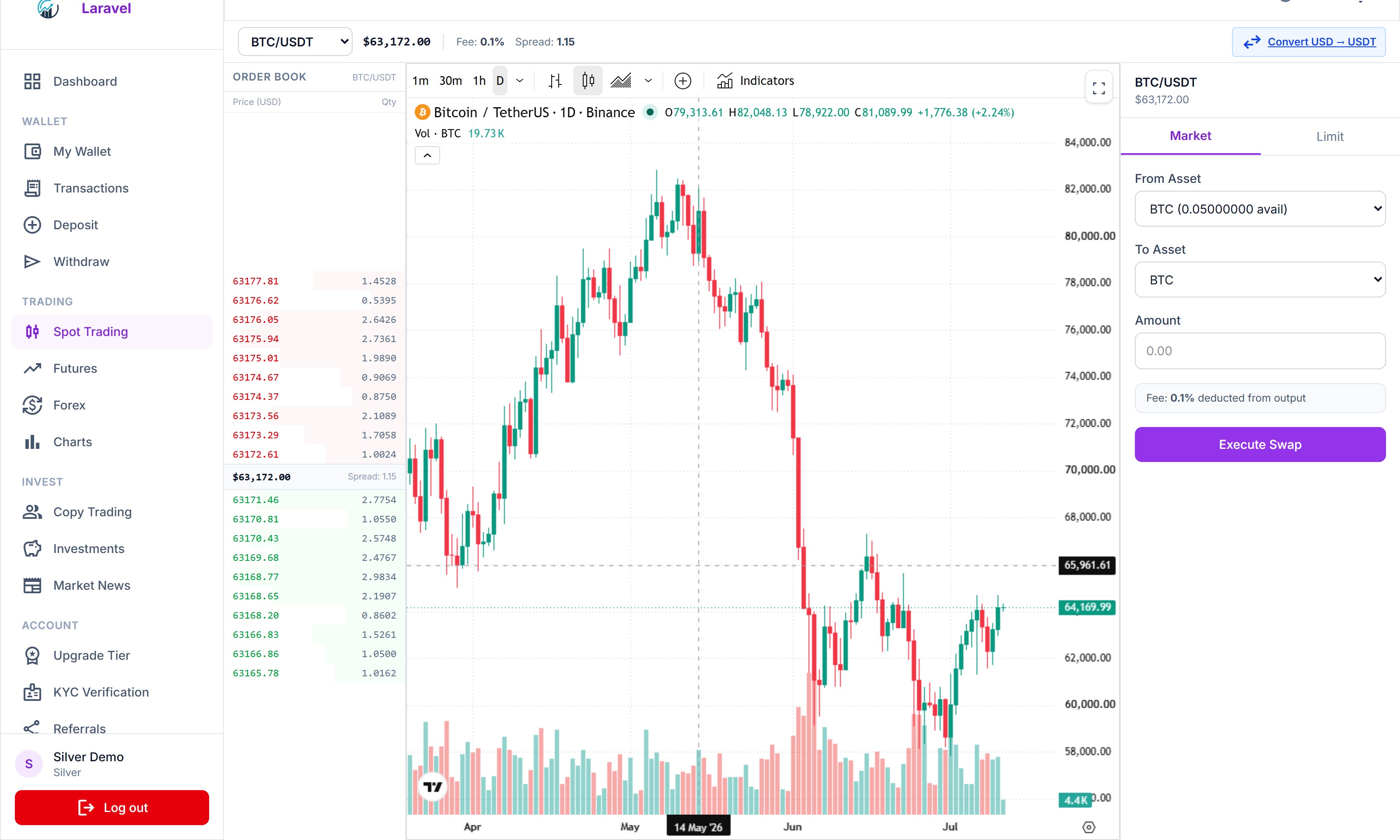
See real-time bid/ask depth for every pair on the trading page.
Full Trade History
Review every trade with timestamps and PnL breakdown.
Popular Crypto Pairs
| Pair | Asset | Max Leverage |
|---|---|---|
| BTC/USDT | Bitcoin | 100:1 |
| ETH/USDT | Ethereum | 75:1 |
| BNB/USDT | BNB | 50:1 |
| SOL/USDT | Solana | 50:1 |
| XRP/USDT | XRP | 50:1 |
| ADA/USDT | Cardano | 25:1 |
| DOGE/USDT | Dogecoin | 25:1 |
| LTC/USDT | Litecoin | 25:1 |
Understanding Cryptocurrency
To trade cryptocurrency with confidence, it helps to understand what you are actually trading. This is not required for technical trading, but it informs why certain events move prices and why the asset class behaves differently from traditional markets.
What is Blockchain?
A blockchain is a distributed ledger — a database that is simultaneously maintained by thousands of computers (nodes) around the world rather than by a single central server. Every transaction is recorded in a block, and blocks are linked (chained) together in chronological order. Once data is written to the blockchain, it is essentially immutable — altering any block would require re-doing all the computational work that followed it, which is computationally infeasible.
Bitcoin was the first application of blockchain technology, using it to enable peer-to-peer digital cash transfers without requiring a central bank or payment processor. Ethereum extended the concept by adding programmable logic — smart contracts — allowing decentralised applications (dApps) to run directly on the blockchain.
Types of Cryptocurrencies
Layer 1 Blockchains
Base-layer networks like Bitcoin, Ethereum, Solana, and Avalanche. These are foundational infrastructure. Price is driven by developer adoption, transaction activity, and network security. BTC and ETH dominate by market capitalisation and liquidity.
DeFi Tokens
Tokens powering decentralised finance protocols — lending, borrowing, and trading without intermediaries. Examples include AAVE, UNI (Uniswap), LINK (Chainlink). Price is driven by protocol usage and the total value locked in the protocol.
Stablecoins
Tokens designed to maintain a fixed value, typically pegged to the US dollar. USDT (Tether), USDC, and DAI are the most widely used. They are used as settlement currencies in crypto markets and as a safe-haven within the crypto ecosystem during volatile periods.
Market Cycles and the Bitcoin Halving
Cryptocurrency markets have historically followed multi-year cycles that align closely with Bitcoin's supply-reduction mechanism known as the halving. Understanding these cycles provides important context for interpreting crypto price movements over longer timeframes.

What is the Halving?
Bitcoin's protocol is programmed to reduce the reward paid to miners by 50% approximately every four years (every 210,000 blocks). This is called the halving. At the original launch in 2009, miners earned 50 BTC per block. After four halvings, the current reward stands at 3.125 BTC per block.
The halving reduces the rate at which new Bitcoin enters circulation. If demand remains constant or increases while supply growth slows, basic economics suggests upward price pressure. Historically, significant bull markets have followed each halving event — though past performance does not guarantee future results, and the causal relationship is debated.
Bitcoin Dominance as a Market Signal
Bitcoin dominance measures Bitcoin's market capitalisation as a percentage of total crypto market cap. It tends to rise during bear markets (as investors reduce risk to Bitcoin as the "safest" crypto) and fall during bull markets (as capital flows into altcoins in search of higher returns — this is called "alt season").
Watching Bitcoin dominance helps you understand the broader risk appetite in the crypto market. Rising dominance while overall market cap is falling generally signals continued caution. Falling dominance alongside a rising total market cap typically signals risk appetite and altcoin opportunity.
Accumulation Phase
After a major bear market, prices consolidate at low levels. Volume is thin. Experienced participants accumulate positions. Market sentiment is at its most negative. This phase can last months to years.
Bull Market / Expansion
Price breaks above prior resistance with increasing volume. Mainstream coverage grows. Altcoins follow BTC's lead and often gain more in percentage terms. FOMO drives retail participation in the later stages, pushing prices to extremes.
Distribution and Bear Market
After the cycle peak, early participants sell into retail demand. Prices begin to fall. Altcoins tend to lose 80–95% from their highs. Bear markets shake out the most speculative participants before the next accumulation phase begins.
Crypto-Specific Risks
Crypto markets carry risks that do not exist in traditional markets. Understanding them does not mean avoiding crypto — it means trading it with the appropriate framework.
Extreme Volatility
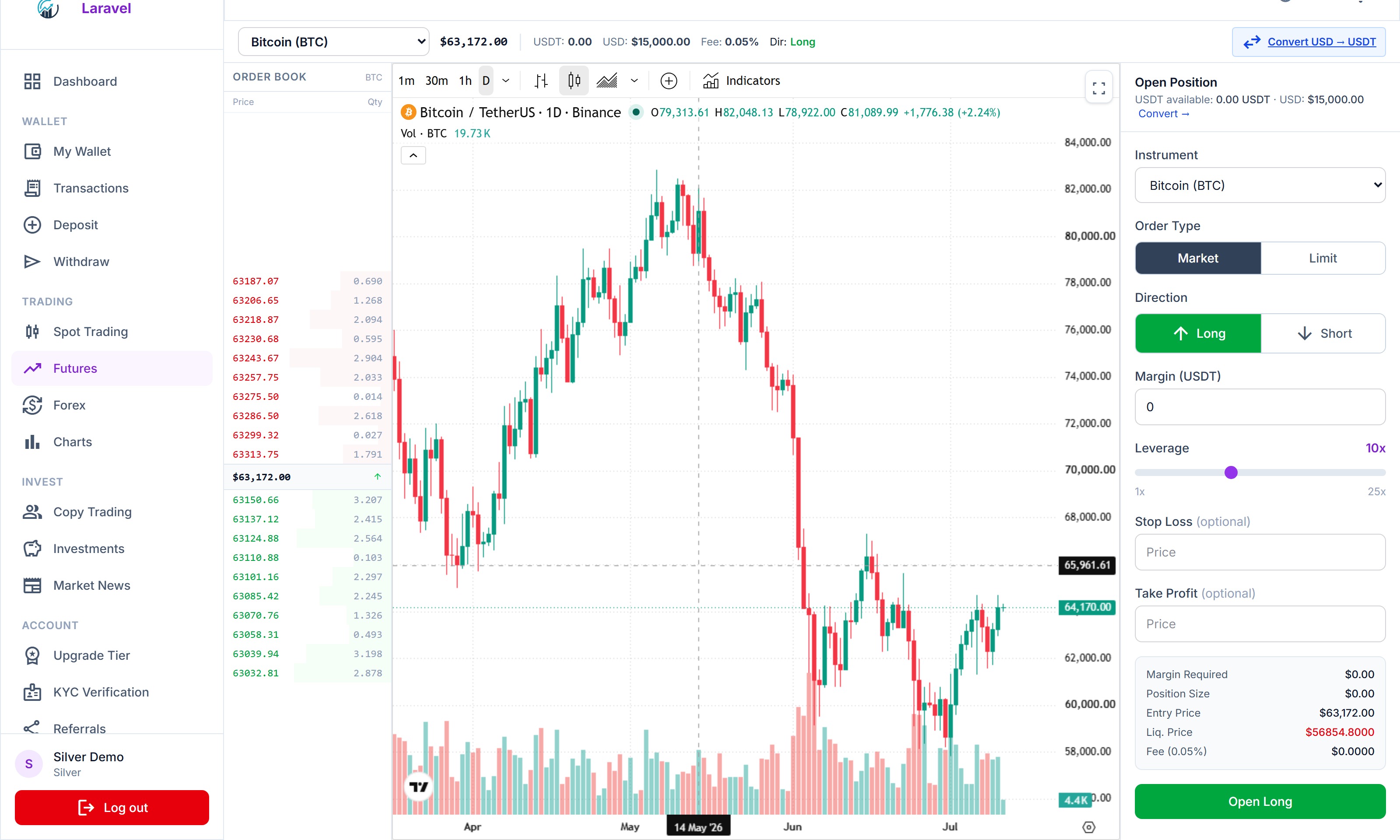
Bitcoin commonly moves 10–20% in a single day during volatile periods. Altcoins can move 50%+ on individual news events. Volatility cuts both ways — amplifying gains as well as losses. Use stop losses and reduce leverage accordingly when volatility is elevated.
Regulatory Risk
Cryptocurrency regulation is evolving rapidly across jurisdictions. Adverse regulatory announcements — particularly from large economies like the US, EU, or China — can cause immediate, sharp price declines. Regulatory approvals (like a spot ETF) can cause sharp rallies.
Liquidity Variance
Bitcoin and Ethereum have deep, liquid markets at all hours. Smaller altcoins may have very thin liquidity, especially outside business hours. In thin markets, large orders can move price significantly and exit a position can be challenging.
Weekend and Holiday Gaps
Unlike traditional markets, crypto does not close for weekends. This eliminates the "gap risk" seen in equities but means positions require monitoring around the clock. Major news events on weekends can cause large moves with no circuit-breaker mechanism.